
All 64 moves, the 15 kinds and how 59 of them evolve
Every move in the game, what kind of move it is and what it asks of you, plus all 59 evolution chains with the exact change each one gives. Which moves to max first, and what the upgrade cards really do.
How a move actually works
Your Pokémon attacks on its own. You never press attack and you never aim. What you control is where you are standing when the active move fires, and which of your four move slots is active. That single rule explains almost everything about how moves feel, because a move's usefulness is decided by how its shape interacts with where the enemies are standing.
Moves level up through the card choices you pick at each level, and a move caps at level 5. Once a move is maxed, the only way to make it stronger is to evolve it: you need to hold the specific upgrade card that move asks for, and only then does the golden evolution card appear in your level-up choices. The game has 64 moves and 59 of them can evolve.
The golden card is not random. It only shows up when a maxed move and its matching upgrade card are both in your inventory. Until then the game will never offer it, no matter how many level-ups you take.
There is also a practical ceiling on how many moves you can run at once. The interface is built around four active slots, so a good build is not one that collects twelve moves — it is one where four moves cover the situations you will actually meet, and the other eight are upgrade material you level on the way to an evolution.
The 15 kinds of move, and what each asks of you
The 64 moves fall into 15 kinds, and the kind tells you more about how to play the move than the type does. Grouping them by the demand they put on you is the fastest way to understand the roster.
| Kind | Count | What it asks of you |
|---|---|---|
| Melee | 9 | You have to be touching the enemy. Strong early, dangerous when surrounded. |
| Projectile | 9 | You aim by walking. The easiest kind to control. |
| Burst | 7 | It radiates in every direction. Damage does not depend on aim at all. |
| Aura | 7 | A permanent field around you. Coverage over time instead of a single hit. |
| Buff | 5 | Deals no damage. It raises a stat while it is active. |
| Beam | 5 | A slow, heavy line that cuts across the map. |
| Orbit | 3 | Bodies circle you. Constant defence that scales with radius. |
| Boomerang | 3 | Flies out and comes back, cutting both ways. |
| Meteors | 3 | Falls onto enemies nearby. Coverage without aiming. |
| Mines | 3 | Lies on the ground and triggers when an enemy steps on it. |
| Dash | 2 | You dash at the enemy and hit everything on the way. |
| Turret | 2 | Stays behind and keeps shooting after you leave. |
| Spray | 2 | A short fan in front of you. Close range, wide but shallow. |
| Trail | 2 | Pools left behind you as you move. |
| Chain | 2 | Jumps from one enemy to the next. |
Three of those kinds change the shape of a fight rather than its numbers. Buff moves deal no damage at all, so a build running one is paying for a stat with a slot. Aura and Orbit moves keep working when you are not aiming anything, which makes them the safest answer to a horde you cannot out-run. Turret moves decouple your damage from your position, which is the closest thing in the game to a passive build.
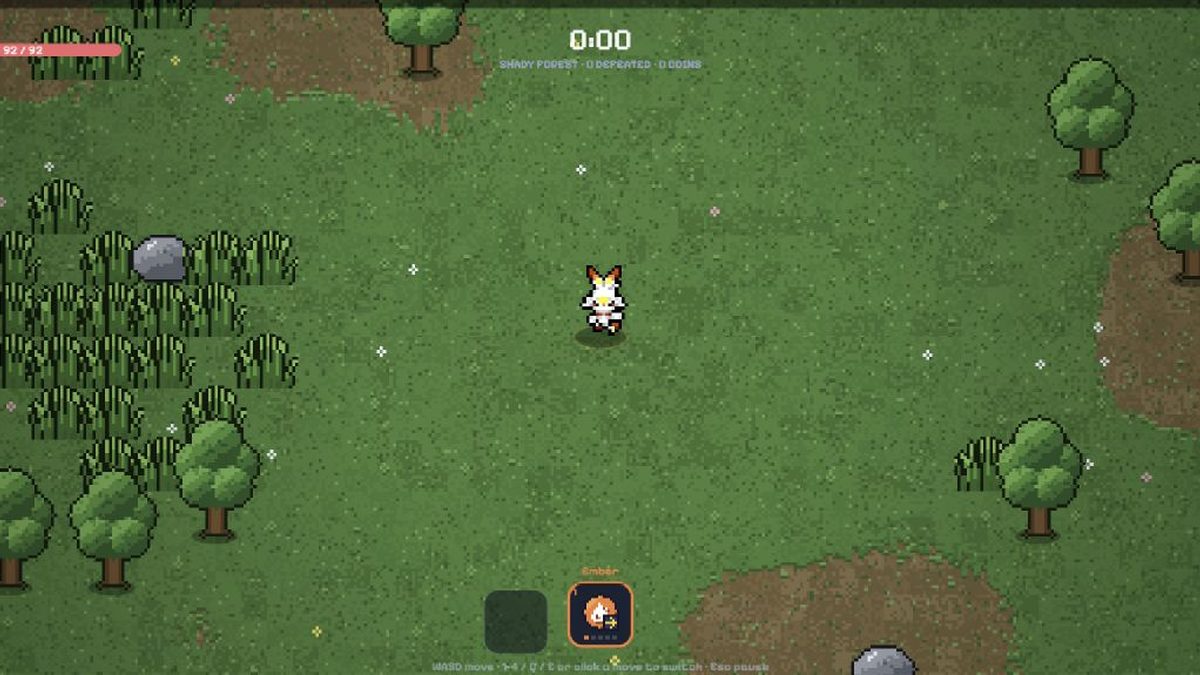
Kind beats type when you pick a starter. A projectile you can walk into position with will beat a stronger melee move for a new player, because a move you cannot aim is a move that kills you when you walk backwards into the horde.
The seven upgrade cards
Upgrade cards are the currency of the move system. Every evolvable move asks for one specific card, and the cards are not interchangeable. There are seven of them, and they are not evenly distributed across the 59 evolutions.
| Upgrade card | Evolutions it unlocks | What it tends to improve |
|---|---|---|
| Power | 24 | Raw damage, more range, and hits in 360° for the melee-style moves |
| Reflexes | 12 | More projectiles, extra pierce, extra meteors or extra boomerangs |
| Sprint | 8 | More distance and less cooldown |
| Synthesis | 7 | Extra orbiting bodies, bigger radius, longer-lasting pools |
| Vigor | 3 | Extra projectiles on burst-type moves |
| Armor | 3 | Extra bodies for turret moves |
| Magnet | 2 | Extra chain jumps |
The distribution tells you how the game thinks. Power alone accounts for 24 evolutions, which is nearly two out of every five, so most of the roster ends up as a bigger version of what it already was. Reflexes is the second card, and it is the one that turns a single-target move into a crowd-clearing one. The rest are narrow: Synthesis for the three orbiting and pooling moves, Sprint for the two dashing and trail moves, Magnet for the two chain moves.
That narrowness is why a run should be planned around upgrade cards rather than around damage. If a card shows up and no move you own wants it, it is still worth taking — it is progress toward a specific evolution you may want later — but if a move you own asks for that card, taking it is what unlocks the golden card for that move.
All 64 moves
The complete move list, with the type and the kind for each one. The effect text is the game's own description of what the move does, and it is worth reading rather than assuming, because several moves behave differently from their name.
| Move | Type | Kind | What it does |
|---|---|---|---|
| Tackle | Normal | Melee | Charges in an arc at everything in front of you. |
| Quick Attack | Normal | Dash | You dash at the enemy like lightning and hit everything on the way. |
| Swords Dance | Normal | Buff | Deals no damage: builds ATTACK while active. |
| Agility | Normal | Buff | Deals no damage: builds SPEED while active. |
| Harden | Normal | Buff | Deals no damage: builds DEFENSE while active. |
| Body Slam | Normal | Melee | A full-weight tackle: slow, short and brutal. |
| Hyper Voice | Normal | Burst | A sound wave that spreads in every direction. |
| Substitute | Normal | Turret | A decoy that stays behind shooting for you. |
| Ember | Fire | Projectile | A fireball at the nearest enemy. |
| Flamethrower | Fire | Spray | A short fan of flames that burns. |
| Fire Spin | Fire | Orbit | Flames that spin around you. Constant defense. |
| Heat Wave | Fire | Burst | Explodes in flames in every direction. |
| Will-O-Wisp | Fire | Turret | Leaves a floating flame that fires on its own and burns. |
| Flame Wheel | Fire | Trail | You run wrapped in fire, leaving a trail of flames. |
| Water Gun | Water | Projectile | A piercing jet. Reliable at any range. |
| Bubble | Water | Burst | A fan of bubbles that slows whatever they touch. |
| Hydro Pump | Water | Beam | A slow but devastating water blast. |
| Aqua Ring | Water | Buff | Deals no damage: builds health REGENERATION. |
| Bubble Beam | Water | Spray | A short fan of bubbles that slows. |
| Vine Whip | Grass | Melee | Long-range whips in a wide arc. |
| Razor Leaf | Grass | Boomerang | Two leaves that fly out and back, cutting both ways. |
| Petal Blizzard | Grass | Orbit | A cyclone of leaves spins widely around you. |
| Grass Knot | Grass | Aura | Roots that snare and pound everything near you. |
| Thunder Shock | Electric | Projectile | A lightning-fast bolt that pierces several enemies. |
| Discharge | Electric | Aura | A permanent electric field around you. |
| Thunderbolt | Electric | Chain | A bolt that jumps from one enemy to the next. |
| Ice Beam | Ice | Beam | An icy beam that almost freezes foes solid. |
| Powder Snow | Ice | Aura | A blizzard around you that slows foes. |
| Hail | Ice | Meteors | Hailstones fall on enemies and slow them. |
| Karate Chop | Fighting | Melee | A sharp, powerful blow straight ahead. |
| Aura Sphere | Fighting | Projectile | An energy sphere that never misses. |
| Sludge | Poison | Projectile | Toxic sludge that poisons on impact. |
| Poison Sting | Poison | Projectile | A quick poisonous sting. |
| Toxic | Poison | Trail | You leave pools of poison that badly poison whoever steps on them. |
| Toxic Spikes | Poison | Mines | Poison spikes that badly poison when they burst. |
| Mud Shot | Ground | Burst | Splashes mud around and slows foes. |
| Bulldoze | Ground | Aura | Shakes the ground: damages and slows everything nearby. |
| Bonemerang | Ground | Boomerang | A bone that flies out and back, hitting hard. |
| Spikes | Ground | Mines | Scatters spikes that burst when stepped on. |
| Gust | Flying | Orbit | Whirlwinds that escort you. |
| Wing Attack | Flying | Melee | A wide wing sweep that pushes foes back. |
| Aerial Ace | Flying | Dash | You dive and slash everything you pass through. |
| Confusion | Psychic | Projectile | A wave that homes in on its target. |
| Psybeam | Psychic | Beam | A wide, heavy-hitting psychic beam. |
| Psychic | Psychic | Burst | A radial mental burst that seeks enemies. |
| Psycho Cut | Psychic | Boomerang | Psychic blades that come back to you. |
| Bug Bite | Bug | Melee | A quick bite in a short arc. |
| String Shot | Bug | Mines | Leaves webs on the ground that trap and greatly slow whoever steps on them. |
| Bug Buzz | Bug | Aura | A constant vibration that pounds everything nearby. |
| Rock Throw | Rock | Projectile | A heavy boulder that pushes the enemy back. |
| Rock Slide | Rock | Meteors | Rocks fall from the sky onto nearby enemies. |
| Lick | Ghost | Melee | A ghostly lick that briefly paralyzes. |
| Shadow Ball | Ghost | Projectile | A shadowy orb that pierces several foes. |
| Hex | Ghost | Chain | A curse that jumps between enemies. Much more damage if they are burned, poisoned or slowed. |
| Dragon Rage | Dragon | Beam | Draconic flames in a straight line. |
| Dragon Dance | Dragon | Buff | Deals no damage: builds ATTACK faster than Swords Dance. |
| Bite | Dark | Melee | A quick bite that knocks foes back. |
| Dark Pulse | Dark | Burst | A wave of dark energy in every direction. |
| Night Shade | Dark | Aura | A shadow surrounds you and consumes what is near. |
| Metal Claw | Steel | Melee | A steel swipe in an arc. |
| Flash Cannon | Steel | Beam | A piercing beam of metallic light. |
| Meteor Mash | Steel | Meteors | Two steel meteors that crush where they land. |
| Fairy Wind | Fairy | Burst | A magical breeze in every direction. |
| Dazzling Gleam | Fairy | Aura | A flash of light all around you. |
Two things stand out when you read the list straight through. The first is that the ten non-damaging moves are all concentrated in two places: three Normal-type buffs (Swords Dance for attack, Agility for speed, Harden for defence), one Water buff (Aqua Ring for regeneration) and one Dragon buff (Dragon Dance, which builds attack faster than Swords Dance does). The second is that Poison, Ground and Bug are the only types with no beam and no chain move, so a partner built around those types has to come at enemies from close or mid range.
All 59 evolution chains
Every evolvable move, the upgrade card it asks for, and the exact change the evolution gives. These are the numbers the game publishes for each evolution, so you can plan a target move precisely instead of hoping.
| Move | Upgrade card | Evolves into | What changes |
|---|---|---|---|
| Tackle | Vigor | Take Down | Vigor · ×1.9 damage, more range and hits in 360° |
| Quick Attack | Sprint | Extreme Speed | Sprint · ×1.9 damage, more distance and less cooldown |
| Body Slam | Power | Giga Impact | Power · ×1.9 damage, more range and hits in 360° |
| Hyper Voice | Reflexes | Uproar | Reflexes · +6 projectiles, ×1.6 damage and +1 pierce |
| Substitute | Armor | Double Team | Armor · ×1.8 damage, +1 at a time and fires faster |
| Ember | Power | Fire Blast | Power · ×1.8 damage, +2 projectiles, +2 pierce and bigger |
| Flamethrower | Reflexes | Overheat | Reflexes · ×1.7 damage, +4 shots and +1 pierce |
| Fire Spin | Synthesis | Sacred Fire | Synthesis · +2 orbs, ×1.7 damage and more radius |
| Heat Wave | Vigor | Eruption | Vigor · +6 projectiles, ×1.6 damage and +1 pierce |
| Will-O-Wisp | Reflexes | Inferno | Reflexes · ×1.8 damage, +1 at a time and fires faster |
| Flame Wheel | Sprint | Flare Blitz | Sprint · ×1.8 damage, bigger and longer-lasting pools |
| Water Gun | Power | Scald | Power · ×1.8 damage, +2 projectiles, +2 pierce and bigger |
| Bubble | Sprint | Surf | Sprint · +6 projectiles, ×1.6 damage and +1 pierce |
| Hydro Pump | Power | Hydro Cannon | Power · ×1.8 damage, a 50% wider and longer beam |
| Bubble Beam | Power | Aqua Tail | Power · ×1.7 damage, +4 shots and +1 pierce |
| Vine Whip | Power | Power Whip | Power · ×1.9 damage, more range and hits in 360° |
| Razor Leaf | Reflexes | Leaf Storm | Reflexes · ×1.8 damage, +1 boomerang and more range |
| Petal Blizzard | Synthesis | Petal Dance | Synthesis · +2 orbs, ×1.7 damage and more radius |
| Grass Knot | Vigor | Frenzy Plant | Vigor · ×1.8 damage and 35% more radius |
| Thunder Shock | Power | Thunder | Power · ×1.8 damage, +2 projectiles, +2 pierce and bigger |
| Discharge | Armor | Electric Terrain | Armor · ×1.8 damage and 35% more radius |
| Thunderbolt | Reflexes | Zap Cannon | Reflexes · ×1.7 damage and +3 jumps |
| Ice Beam | Power | Blizzard | Power · ×1.8 damage, a 50% wider and longer beam |
| Powder Snow | Sprint | Icy Wind | Sprint · ×1.8 damage and 35% more radius |
| Hail | Reflexes | Avalanche | Reflexes · ×1.7 damage, +2 meteors and more radius |
| Karate Chop | Power | Close Combat | Power · ×1.9 damage, more range and hits in 360° |
| Aura Sphere | Reflexes | Focus Blast | Reflexes · ×1.8 damage, +2 projectiles, +2 pierce and bigger |
| Sludge | Power | Sludge Bomb | Power · ×1.8 damage, +2 projectiles, +2 pierce and bigger |
| Poison Sting | Sprint | Poison Jab | Sprint · ×1.8 damage, +2 projectiles, +2 pierce and bigger |
| Toxic | Synthesis | Poison Gas | Synthesis · ×1.8 damage, bigger and longer-lasting pools |
| Toxic Spikes | Synthesis | Gunk Shot | Synthesis · ×1.8 damage, +2 mines and a bigger blast |
| Mud Shot | Power | Earth Power | Power · +6 projectiles, ×1.6 damage and +1 pierce |
| Bulldoze | Power | Earthquake | Power · ×1.8 damage and 35% more radius |
| Bonemerang | Power | Bone Rush | Power · ×1.8 damage, +1 boomerang and more range |
| Spikes | Power | Fissure | Power · ×1.8 damage, +2 mines and a bigger blast |
| Gust | Sprint | Hurricane | Sprint · +2 orbs, ×1.7 damage and more radius |
| Wing Attack | Power | Brave Bird | Power · ×1.9 damage, more range and hits in 360° |
| Aerial Ace | Sprint | Acrobatics | Sprint · ×1.9 damage, more distance and less cooldown |
| Confusion | Reflexes | Psyshock | Reflexes · ×1.8 damage, +2 projectiles, +2 pierce and bigger |
| Psybeam | Power | Future Sight | Power · ×1.8 damage, a 50% wider and longer beam |
| Psychic | Magnet | Expanding Force | Magnet · +6 projectiles, ×1.6 damage and +1 pierce |
| Psycho Cut | Reflexes | Psychic Fangs | Reflexes · ×1.8 damage, +1 boomerang and more range |
| Bug Bite | Power | X-Scissor | Power · ×1.9 damage, more range and hits in 360° |
| String Shot | Reflexes | Sticky Web | Reflexes · ×1.8 damage, +2 mines and a bigger blast |
| Bug Buzz | Synthesis | Swarm | Synthesis · ×1.8 damage and 35% more radius |
| Rock Throw | Power | Stone Edge | Power · ×1.8 damage, +2 projectiles, +2 pierce and bigger |
| Rock Slide | Reflexes | Stealth Rock | Reflexes · ×1.7 damage, +2 meteors and more radius |
| Lick | Power | Shadow Punch | Power · ×1.9 damage, more range and hits in 360° |
| Shadow Ball | Reflexes | Phantom Force | Reflexes · ×1.8 damage, +2 projectiles, +2 pierce and bigger |
| Hex | Magnet | Poltergeist | Magnet · ×1.7 damage and +3 jumps |
| Dragon Rage | Power | Draco Meteor | Power · ×1.8 damage, a 50% wider and longer beam |
| Bite | Power | Crunch | Power · ×1.9 damage, more range and hits in 360° |
| Dark Pulse | Sprint | Snarl | Sprint · +6 projectiles, ×1.6 damage and +1 pierce |
| Night Shade | Synthesis | Nightmare | Synthesis · ×1.8 damage and 35% more radius |
| Metal Claw | Power | Iron Head | Power · ×1.9 damage, more range and hits in 360° |
| Flash Cannon | Armor | Steel Beam | Armor · ×1.8 damage, a 50% wider and longer beam |
| Meteor Mash | Power | Magnet Bomb | Power · ×1.7 damage, +2 meteors and more radius |
| Fairy Wind | Power | Moonblast | Power · +6 projectiles, ×1.6 damage and +1 pierce |
| Dazzling Gleam | Synthesis | Misty Terrain | Synthesis · ×1.8 damage and 35% more radius |
The multipliers cluster tightly, and that is useful. The seven ×1.9 evolutions are all melee moves that become 360° coverage: Tackle into Take Down, Body Slam into Giga Impact, Vine Whip into Power Whip, Karate Chop into Close Combat, Wing Attack into Brave Bird, Bug Bite into X-Scissor, Lick into Shadow Punch, Bite into Crunch, Metal Claw into Iron Head. The ×1.8 group is the projectile and turret set, and the ×1.7 and ×1.6 groups are the wide multi-shot conversions where the multiplier is smaller because the number of projectiles goes up instead.
How to read an evolution note
An evolution note can add damage, coverage, reach or a new body, and those four things are not interchangeable. A note that adds projectiles is the most valuable kind in a dense wave, because each extra projectile is another hit landing. A note that adds range changes which fights you can take at all. A note that adds radius or bodies is what makes a defensive move keep up with the late game.
- Damage. The ×1.9 and ×1.8 multipliers are close enough that the extra effect is usually the real reason to take the evolution.
- Pierce. A projectile that pierces passes through a line of enemies instead of stopping at the first one, which is the difference between one hit and five in a corridor.
- Extra bodies. Synthesis and Armor add orbiting orbs, turrets or clouds. They multiply your damage without needing a better aim.
- Reach. More range and 360° coverage let a melee-style move keep hitting while you back away, which is how melee moves survive the late game.
- Cooldown. Sprint evolutions add distance and reduce cooldown, which is the quietest upgrade in the game and often the one that lets you survive.
One note, one decision. A level-up gives you three cards and you take one. If you are chasing an evolution, the card that matches your maxed move is worth more than the card with the biggest number — unless the big number is a real evolution for a move you already use.
Which moves to max first
If you are new, you will not have all 64 moves and you cannot evolve everything. The order matters more than it sounds, because a move at level 5 that never gets its upgrade card is a move that wasted five level-ups.
- Max one projectile early. A projectile move is the easiest to aim and the easiest to keep alive with. Take it to level 5 as soon as you can, then hold onto whatever upgrade card it asks for.
- Hold the card, not the move. When the golden evolution card finally appears, take it immediately. An evolution is the single largest power spike available in a run.
- Keep a second damage move. Four slots is not much. One maxed projectile, one evolving move, one defensive or utility kind, and one slot you are allowed to lose.
- Do not build around a Buff move early. A buff takes a slot to raise a stat that another card could have raised. Buffs pay off late, when your base damage is high enough to matter.
- Treat orbit and aura moves as insurance. They do not need aiming, so they cover the seconds when a dense wave lands on top of you.
There is one more thing worth knowing about the level cap. Because a move stops at level 5, past that point your level-ups have to go somewhere else — new moves, stat boosts for your partner, or more cards for a second move. A run that maxes its first two moves early spends the rest of its levels on a broader board, which is usually the stronger position by minute 20.
What the type on a move is for
The type on a move decides how it interacts with the enemy roster rather than how it looks. The chart is deliberately flatter than the main games: ×1.6 for super effective, ×0.6 for resisted, ×0.3 for immunities, and a ×2.4 cap on a dual-type matchup. That means a type advantage is worth having but never worth building a whole run around.
What that means in practice is that you should pick the kind you can use well first and take the type matchup second. A burst move that hits everything in range will clear more enemies than a projectile that happens to be super effective against three of them.
Type is a multiplier, not a plan. At ×1.6 the matchup is worth roughly one extra move level. The bigger lever is always coverage — how many enemies a single cast touches.
Questions about this
How many moves are in PokéSurvivor?
64, spread across all 18 types. 59 of them can evolve, and the five that cannot are the buff moves: Swords Dance, Agility, Harden, Aqua Ring and Dragon Dance.
How do I get a move to evolve?
Take the move to its level cap of 5, then hold the specific upgrade card that move asks for. Only when both are true does a golden evolution card appear in your level-up choices.
Which upgrade card is the most useful?
Power, because 24 of the 59 evolutions ask for it. If you are chasing a specific move, the best card is the one that move requires, regardless of how many evolutions it unlocks in general.
Do buff moves do any damage?
No. Swords Dance, Agility, Harden, Aqua Ring and Dragon Dance deal no damage at all; they build attack, speed, defence or regeneration while they are active.
Can I have more than four moves?
The interface is built around four active slots. You can collect and level more moves than that, but the extra ones are upgrade material rather than part of the rotation.
Written for PokéSurvivor.online, an independent guide. Not affiliated with Nintendo, Creatures, GAME FREAK or The Pokémon Company. If a number here ever disagrees with the game you are playing, the game wins — tell us and we will fix the page.